STANLEY Jointer Bottom Plane
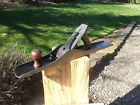
( Brand: Stanley ), ( Part Type: Jointer Bottom Plane ), ( Country/region Of Manufacture: United States )
Review STANLEY Early Jointer Type Bottom Plane Corrugated Exc
The Stanley 1910-1918 Jointer Bottom Plane is a testament to the enduring quality and craftsmanship of Stanley's legacy. This vintage plane, specifically a No. 7 jointer, was produced during Stanley's golden era of toolmaking.
The body of the plane is made of solid cast iron, showcasing the intricate detailing and sturdy construction that Stanley was renowned for. The casting features a distinctive rectangular shape with rounded corners, and the face is flat and featureless, save for the narrow mouth and adjustable depth stop. The depth stop is adjustable using a thumb screw, allowing for precise control over the thickness of the cut.
The 12-inch long, carbide-tipped blade is housed in a hardwood chipbreaker, which helps to prevent the wood from splitting and ensures a clean, smooth cut. The blade can be easily adjusted using the lateral lever, which allows for fine-tuning of the blade's position within the plane.
The handle of the Stanley 1910-1918 Jointer Bottom Plane is made of high-quality hardwood, providing a comfortable and secure grip during use. The handle is attached to the body of the plane using a brass cap screw, which adds to the plane's overall durability.
This Stanley jointer bottom plane is in excellent condition, with minimal wear and tear and no signs of rust or corrosion. The blade is sharp and ready for use, and the plane functions smoothly and efficiently. This is a rare opportunity to own a piece of history, a tool that was used by skilled craftsmen over a century ago to create beautiful, lasting pieces of furniture.
Pros of buying a Stanley 1910-1918 Jointer Bottom Plane:1. Heritage and Quality: Stanley is a renowned brand with a long history in the woodworking industry. This jointer bottom plane is from their golden era, known for its excellent craftsmanship and durability.
2. Smooth Performance: The plane's cast iron body and chrome-plated lever cap provide excellent stability and resistance to rust, ensuring a smooth cutting action.
3. Adjustability: The Stanley 1910-1918 Jointer Bottom Plane offers adjustable depth of cut and lateral adjustment, allowing for precise control over the shavings thickness and straightness of the cut.
Cons of buying a Stanley 1910-1918 Jointer Bottom Plane:1. Maintenance: Older tools like this one may require more maintenance and care to keep them in good working condition.
2. Price: Due to their high demand and historical value, Stanley planes from this era can be quite expensive.
3. Availability of Spare Parts: Finding replacement parts for older Stanley planes can sometimes be challenging, which might require you to source them from specialized suppliers or even manufacture them yourself.
Conclusion:The Stanley 1910-1918 Jointer Bottom Plane is a valuable addition to any woodworker's toolbox, offering a combination of heritage, quality, and performance. Although it may require more maintenance and be more expensive than newer alternatives, the plane's smooth cutting action and adjustability make it an excellent investment for those passionate about traditional woodworking techniques.
Recommendation:If you're interested in this jointer bottom plane, make sure to thoroughly inspect it for any signs of damage or wear before purchasing. Research and communicate with the seller to learn more about the tool's history and condition. Consider investing in a good quality honing stone and sharpening guide to keep your plane in top shape. Lastly, consider the financial commitment required to maintain and use this tool before making your decision.
Details:
Early Stanley 7 corrugated bottom jointer plane type exc here I have up for offer is a wonderful condition and extremely clean Stanley 7 corrugated bottom jointer plane with approx.
The lucky winner of this very clean early plane to pay ship costs.
I can't believe this knob was ever replaced based on the condition of the plane itself. Everything on this plane seems to be original including the tall front knob.
The type 12 is when the tall knobs apparently came into production so my guess is that they had run out of the shorter knobs at the end of this type production run and just substituted a taller knob.
The cutter would need to be resharpened a bit to be put into use.
- $84.99-$180.00
specifications clampvisesam:
- brand: Stanley
- part type: Jointer Bottom Plane
- country/region of manufacture: United States
Seller:
- zipcode: 97268
- city: Portland, Oregon
Payments:
- PayPal
Shipping:
- type: Calculated
- handling: 1 days
Offer:
- best offer: false
- Started: February 25, 2015, 3:00 am
- # bids: 12
- quantity: 1
- # Sold: 0
- min. bid: $62.00
Returns:
- details: I will ship item within 1 day unless otherwise stated. Item if clearly misrepresented will be given a refund within 14 days of end of offer. All details of any antique or used items cannot always be identified so buyers must contact seller to clarify details regarding such items. Insurance is no longer offered with the invoice so if you wish to add insurance, it must be paid buy buyer but buyer must be aware if any lost or damaged items occur by the shipper and no insurance is purchased, the buyer accepts the responsibility. A new invoice can be created for any item that requires insurance. The added cost will just reflect the newly created invoice. Please contact seller!
- time: 14 Days
- type: Money Back
- policy: returns accepted
- paid by: Buyer
Ratings:
- Great tool, thx! 02-17-15
- Great book. Excellent transaction. A+++++++++++++ seller 02-14-15
- Received in excellent condition. 02-18-15
- A +++ Great seller 02-18-15
- smooth transaction / thank you 02-22-15
General:
- Collectibles > Tools, Hardware & Locks > Tools > Carpentry, wood working > Planes
- in stock: Yes
- condition: Used
Stanley Is Similar To:
- 4 Stanley Single Blade Bench Plane New 076174124040 (34.7% similar) Stanley 4 single blade bench plane this is constructed with a cast iron base precision ground sides and bottom. Gray, cast-iron base with precision-ground sides and bottom durable epoxy coating provides long-lasting protection hardened, tempered steel gives cutter edge durability adjusts for depth ...(September 28th, 2018)
- 0-12-313 Stanley Iron Bench Plane Replacement 076174123135 (33.1% similar) Can be honed to a razor-sharp edge. From the manufacturer hardened, tempered high-carbon chrome steel assures excellent edge retention. If you are not satisfied with the purchase, please through to resolve any problems. Features: make sure this fits. Ground to a flat surface for easy sharpening. ...(August 5th, 2018)
- 0-12-378 Stanley Packages Of Or Replacement Plane Blades Cutters Total (37.4% similar) Shipping charges quoted in the listing are applicable for lower 48 us states. Great replacement parts for a handy little plane. Condition: these are new in the package and unused. This listing is for a lot of 3 packs Stanley RB108 plane blades that fit both the RB5 or larger RB10 planes...(August 12th, 2018)
- 0076174121384 Stanley Sweetheart Block Plane (30.1% similar) Stanley sweetheart no. Boxes, AK, hi, pr, GU or APO fops and the like as these may cost extra to ship. Precision-ground ductile cast iron base for accuracy block plane, 12-138: height : 10 length : 20 width : 11 is made from extra-thick 1/8 a2 steel excellent edge retention Norris-type adjuster ...(June 16th, 2018)
- 0076174129045 Stanley Contractor Bench Plane Ct (31% similar) It has adjustable mouth opening precision ground cutter. Ground cast iron bottom machined flat and true. Stanley contractor bench plane. Boxes, AK, hi, pr, GU or APO fops and the like as these may cost extra to ship. Lifetime warranty. If there is something you are looking for in particular and ...(June 16th, 2018)
- 021-296 Stanley Surface Plane 12-1-2 076174212969 (37.3% similar) The cost of return shipping is not included. Surface plane product features Stanley surfer forming plane material: die cast alloy: plane base length : in. Handle material: plastic blade width : 1-5 8 in. You can reach us at...(April 13th, 2017)
- Plane 0559b Stanley Wood Model (28.3% similar) I try to be as accurate as possible without exaggeration. Stanley wood plane model 0559BTHIS plane is in used condition. Before I list them I check them over but I am not an expert in any particular field. Most of the items I sell are used...(March 4th, 2015)
- 076174122473 Stanley Block Plane Model (35.5% similar) A new in the box Stanley block plane, model, 12-247, it is long, and cut...(September 3rd, 2017)
- 076174213997 Pocket Plane Stanley Upc (18.9% similar) Pocket plane brand: Stanley mfg part Nebr: UPC: 97 package of...(April 29th, 2018)
- 1-12-325 Stanley Two 2 Double Plane (28.8% similar) Brand new listings posted daily. Ask about price matching on identical products competitors must include shipping. These are as-is, no debate...(December 21st, 2016)
- 12-102 Stanley Block Plane New (34.3% similar) Happy buying. Please feel free to ask questions. Includes plane, original wrapping and documents. Stanley block-plane new in open box...(May 19th, 2018)